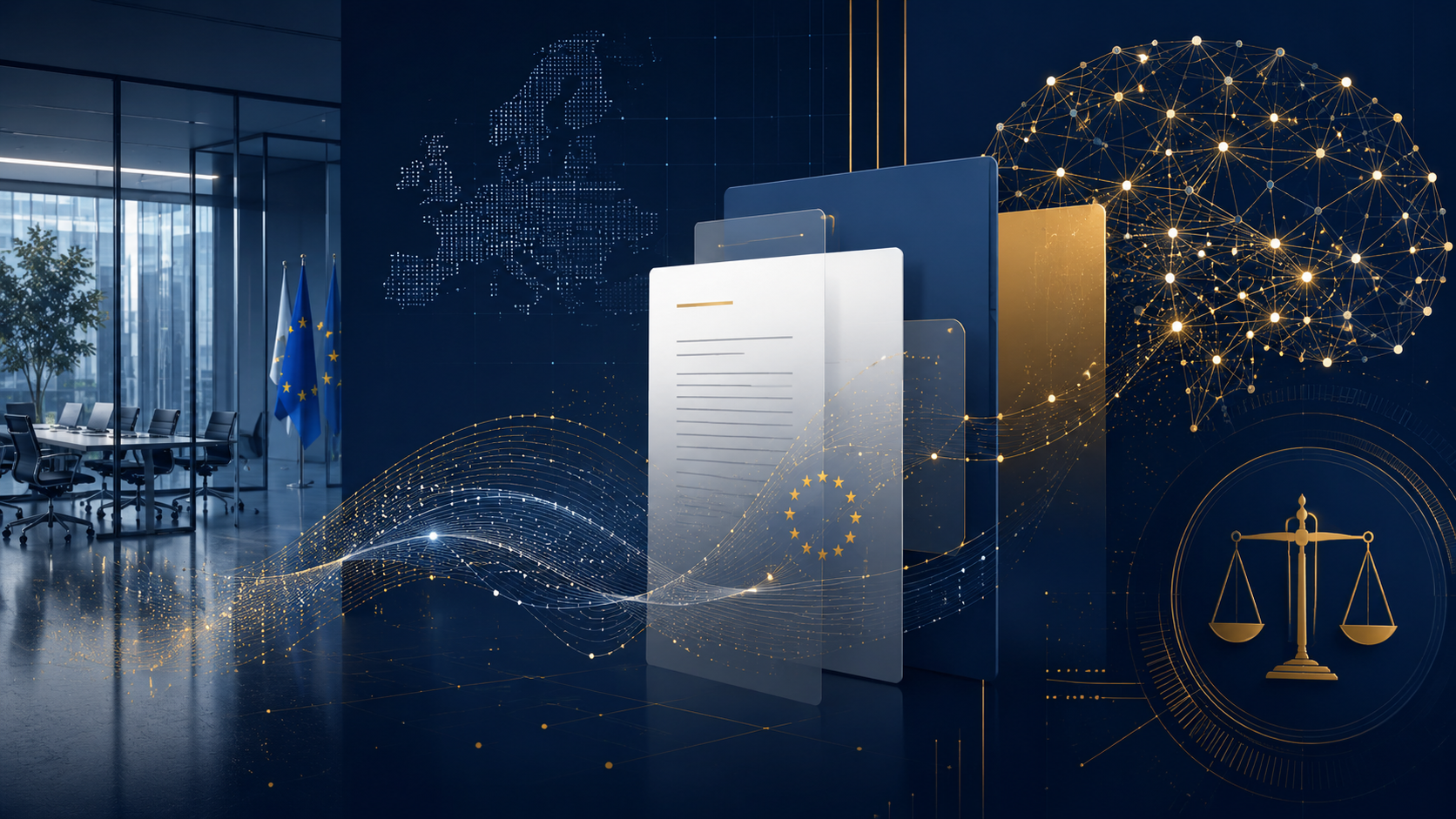
⚠️ Your employees are using ChatGPT right now — and you probably have no policy governing it.
This isn’t a hypothetical. Across Europe, staff are pasting client data, contracts, and confidential strategies into public AI tools every day. Most do it to save time. Few realise the legal exposure they’re creating for the business.
Under the EU AI Act and existing GDPR obligations, the company — not the employee — carries the responsibility. 🏛️ Unmonitored AI use can lead to data breaches, intellectual property loss, and compliance gaps that surface only when it’s too late to fix quietly.
The challenge for most SMEs isn’t bad intent. It’s the absence of a clear internal framework: who can use which tools, for what data, and under what conditions. 📋
Regulators expect organisations to demonstrate governance, not just good faith. The first step is understanding where your business actually stands today.
Curious about your real exposure? 👉 A free AI exposure assessment at phanabenfi.com gives you a clear, factual picture in minutes — no jargon, no pressure.
#EUAIAct #AICompliance #DataPrivacy #BusinessGovernance #SMEEurope
⚠️ Your employees are using ChatGPT right now — and you probably have no policy in place.
Here’s what most European business owners don’t realise: when staff paste customer data, contracts, or internal documents into public AI tools, that information can leave your control entirely. Under the EU AI Act and GDPR, your company — not the employee — carries the legal responsibility. 📋
This isn’t a hypothetical. Surveys across Europe show that the majority of employees already use generative AI at work, often without their managers knowing. No usage guidelines. No data safeguards. No oversight.
The result? Potential breaches of confidentiality, exposure of personal data, and compliance gaps that regulators are now actively examining as enforcement timelines approach. 🔍
The good news: this is manageable once you understand where your business actually stands. A clear internal policy and basic governance can dramatically reduce your exposure. ✅
The first step is simply knowing your risk level.
You can check your business’s AI exposure with a free assessment at phanabenfi.com — it takes only a few minutes.
#EUAIAct #AICompliance #DataPrivacy #BusinessGovernance #AIRegulation
⚠️ Your employees are probably using ChatGPT right now — without a single rule in place. And under the EU AI Act, that’s your liability, not theirs.
Most European business owners assume AI governance is an “IT problem” or something only big tech needs to worry about. But the moment a staff member pastes client data, financial figures, or confidential contracts into a public AI tool, your company is exposed — to data breaches, compliance failures, and regulatory penalties that are already taking shape across the EU. 🔍
The uncomfortable truth: the absence of an internal AI policy doesn’t reduce your risk. It increases it. Regulators expect organisations to demonstrate oversight of how AI is used — even informally — by their teams.
The good news? This is fixable. The first step is simply understanding where you stand. 📊
If you’re not sure whether your business is exposed, it’s worth finding out before someone else does it for you.
Discover your AI exposure with a free assessment at phanabenfi.com 👉
#EUAIAct #AICompliance #BusinessRisk #AIGovernance #DataPrivacy
⚠️ Your employees are probably using ChatGPT right now — and your business could be liable for it.
Here’s the uncomfortable truth: most European SMEs have zero internal policy governing how staff use public AI tools. Yet under the EU AI Act, the responsibility for misuse, data leaks, and non-compliant outputs sits with the organisation — not the individual typing the prompt. 📋
When an employee pastes client data, contracts, or financial figures into a free AI tool, that information may leave your control entirely. It can be stored, processed outside the EU, or used to train models you’ll never audit. This isn’t hypothetical — it’s already happening in companies that believe they’re “too small to matter.” 🔍
The EU AI Act doesn’t grant exemptions based on size. Governance gaps that feel harmless today can become regulatory and reputational problems tomorrow.
The first step isn’t panic — it’s awareness. Understanding where your AI exposure actually lies puts you back in control. ✅
Find out exactly where your business stands with a free AI exposure assessment at phanabenfi.com.
#EUAIAct #AIGovernance #BusinessCompliance #DataPrivacy #SMEsEurope
⚠️ Your HR team might be breaking EU law right now — and they don’t even know it.
If your business uses AI to screen CVs, rank candidates, or filter applications, you’re operating in one of the most scrutinised areas of the EU AI Act. 📋
AI systems used in recruitment and employment decisions are explicitly classified as **high-risk** under the Act. That means strict obligations: transparency, human oversight, bias monitoring, and detailed documentation. Non-compliance can lead to penalties of up to €15 million or 3% of global annual turnover.
Many SMEs assume these rules only apply to large tech companies. They don’t. If you use a third-party hiring tool powered by AI, the responsibility can still fall on your shoulders as the deploying business. ⚖️
The hard part? Most owners can’t even map where AI sits in their operations — let alone assess their exposure.
Understanding your risk isn’t optional anymore. It’s the foundation of staying compliant and protecting your business. 🛡️
Curious where your company stands? Take the free AI exposure assessment at phanabenfi.com and find out in minutes.
#EUAIAct #AICompliance #HRTech #BusinessRisk #AIGovernance
Navigating AI Compliance: Essential Strategies for European Businesses
Understanding AI Compliance Risks
Artificial Intelligence (AI) offers significant advantages, but it also introduces new challenges regarding compliance. European businesses face strict regulations that demand a comprehensive understanding of AI usage, potential risks, and compliance frameworks. Here are key compliance risks to consider:
- Data Privacy Violations: Ensuring AI systems adhere to GDPR requirements is crucial.
- Algorithmic Bias: Unchecked AI can lead to biased outcomes impacting marginalized groups.
- Transparency Issues: Organizations must ensure that AI decisions are explainable and auditable.
Conducting an AI Risk Assessment
A thorough AI risk assessment helps identify compliance gaps and formulates strategies to mitigate them. Here are steps to conduct an effective assessment:
- Identify AI Applications: List all AI technologies in use, particularly those that handle sensitive data.
- Evaluate Data Usage: Analyze how data is collected, processed, and stored, ensuring compliance with GDPR and other regulations.
- Assess Algorithmic Fairness: Use tools to detect potential bias in AI algorithms.
- Document Findings: Maintain detailed records of your assessment process and outcomes.
Establishing Effective Governance Structures
Implementing a governance framework is essential for maintaining AI compliance. Consider the following guidelines to create a robust governance structure:
- Cross-Functional Teams: Involve various departments, including legal, IT, and operational teams, to oversee AI implementation.
- Regular Training: Provide ongoing training for employees on compliance obligations and AI ethics.
- Compliance Audits: Schedule periodic audits to ensure ongoing adherence to compliance standards.
Creating a Compliance Readiness Report
A compliance readiness report acts as a blueprint for your AI initiatives, assuring stakeholders of your commitment to responsible AI use. Here’s how to prepare one:
- Executive Summary: Provide an overview of your AI compliance status and initiatives.
- Regulatory Overview: Outline the applicable regulations and standards your business must meet.
- Risk Management Strategies: Document current strategies in place to mitigate identified risks.
- Action Plan: Develop a specific action plan for enhancing compliance, including timelines and responsible parties.
Practical Guidance for Effective AI Compliance
To ensure your organization complies with AI regulations, consider these practical tips:
- Engage with Stakeholders: Regularly communicate with stakeholders about compliance initiatives.
- Monitor Regulatory Changes: Stay informed about evolving AI legislation at the EU level.
- Utilize Technology Solutions: Leverage AI tools that streamline compliance monitoring and reporting.
Conclusion
As European businesses increasingly adopt AI technology, understanding and managing AI compliance is crucial. By conducting risk assessments, establishing governance frameworks, and preparing compliance readiness reports, companies can navigate the complexities of AI regulations confidently. Embracing these strategies not only enhances compliance but also fosters a culture of responsible and ethical AI usage.
Welcome to WordPress. This is your first post. Edit or delete it, then start writing!